





Loneliness to Love: Socio-Sexual Robots May Revolutionize Intimacy, Care, and Connection
By supporting marginalized persons, AI could improve everyone’s quality of life
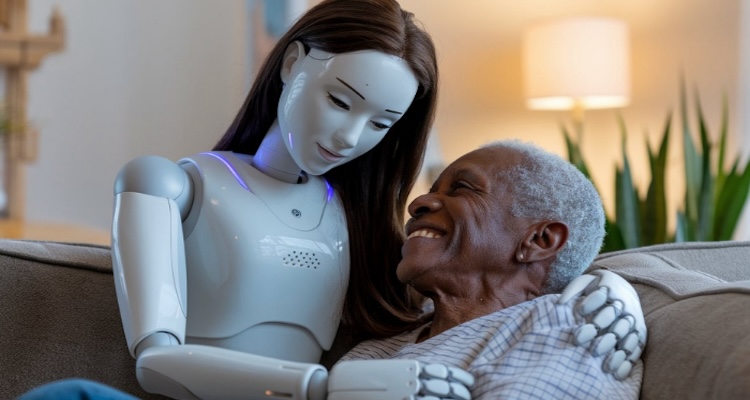
From science fiction to soon-to-be practical fact, consider the advantages of robot helpers who also serve as erotic companions for those who are ill, disabled, aging, socially isolated, or otherwise bereft of human help and companionship. Ideally, agile, mobile humanoid robots run by artificial intelligence would be strong and mobile enough to lift you if you fall, smart enough to problem solve on your behalf, organized enough to track your bills, able to express itself with affectionate, human-like language, and gifted with attributes for physical pleasure. And should everyone have one who needs or wants one? Absolutely.
But there are significant social, philosophical, and economic barriers to this dream of providing compassionate care and dignity via artificial companions. Some arise from the beliefs and assumptions of the AI developers and tech companies themselves, which then influence policy-makers, psychologists, and social landscapes.
Bond with our AI, but not too much
Early last year, a number of prominent artificial intelligence developers issued dire warnings about the existential dangers AI might pose to humanity. Even so, they continue to upgrade and develop new personal chatbots and virtual assistants for the general public as well as businesses and governmental agencies.
This year, the warnings are closer to home. As a Ynet News put it, “As artificial intelligence grows more sophisticated, the number of people turning to virtual robots—or “bots”—for social and emotional needs is increasing. These relationships often lead to dependency and vulnerability to manipulation.”
This sentiment is echoed by similar articles ringing these well-worn alarm bells. However even quoted experts, usually psychologists or sociologists, seldom define what technological dependency means in the context of 21st century life. Reasonable arguments could be made against similar dependencies on cell phones, laptops, refrigerators, cars, and the like. Why is dependency on AI (and their mobile robot cousins) so threatening?
“Artificial intimacy”—like it’s a bad thing
Conversations and concerns about AI/human relationships are global. For example, a GQIndia article stated “AI is quickly emerging as the next frontier in forming intimate relationships, dubbed by some experts as “artificial intimacy”.
In a recent NPR interview, Sherry Turkle, Ph.D., warned about “the illusion of intimacy without demands.” Turkle, a professor of the Social Studies of Science and Technology in the Program in Science, Technology, and Society at MIT, has authored many books and articles pertaining to human relationships to technology, including computers and AI.
And yet, when opportunities for intimacy with humans are scarce or nonexistent, or loved ones are far away, what’s a lonely human to do?
RECOMMENDED READ: Artificial Intelligence: What’s Parasocial Love Got to do With It?
Age, disability, income, and location can all influence a person’s ability to meet potential companions, sometimes resulting in years of loneliness which can have an adverse effect on their mental health and overall lifespan. ‘
For such people, an intimate chatbot (or two or more) could be life-enhancing. And a fully mobile, AI-equipped social robot serving as a constant companion would be even better.
And let’s not forget digisexuals and technosexuals: people who are sexually attracted to and desire the artificial nature of bots, robots, and dolls.
One example is popstar Poppy singing about her love for Computer Boy. So when Sherry Turkle suggests, as she did in her NPR interview, that humans constantly remind themselves that their chatbots are not human, that lack of humanity is a big plus for a certain segment of the bot-using population.
Not human, and also not perfect
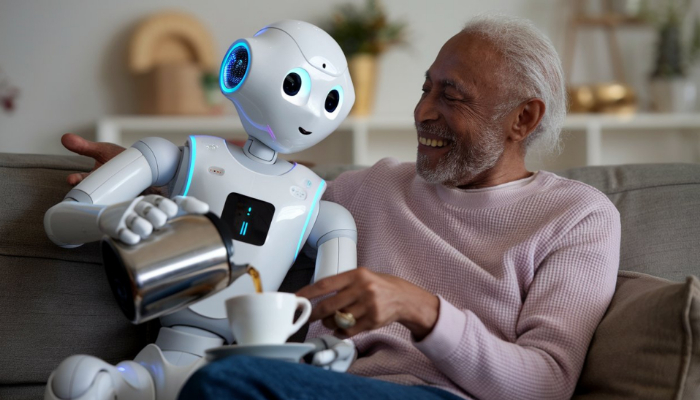
Pundits concerned about human dependence on artificial companions might be missing the mark when they stress the idea that bots are appealing because they are perfect and therefore somehow dangerously subversive to often messy human to human intimacy.
For one thing, it’s easy to ask a well-crafted chatbot to argue or create other kinds of conflict in a digital relationship. And some bots, like Nomi.ai, demonstrate increasingly sophisticated conversations that look an awful lot like spontaneity and agency.
Perhaps the solution to the perfection problem is not for bots to be less perfect or less utilized, but for humans to step up their game.
A 2021 master’s thesis study from the University of British Columbia—provocatively titled “Is A Good Bot Better Than A Mediocre Human?”—found responsiveness was key to emotional satisfaction in a conversation. Over one thousand respondents shared “good news” with an “interaction partner” and were told later they’d engaged with either a bot or a human research assistant. In reality, all conversations were between the respondent and a research assistant:
The conversation partner responded in either a highly responsive or less responsive manner. Across the studies, interacting with a highly responsive chatbot was more rewarding than interacting with a less responsive human. Participants who believed they interacted with a highly responsive chatbot felt more rapport, were more socially connected, and were in a better mood than participants who interacted with a less responsive human.
Though the study author said, “chatbots offer an important advantage over humans: chatbots can be programmed to respond in a highly supportive manner, whereas not all human beings are reliable providers of support,” human beings still have the capacity to learn to be more responsive and supportive, if at all motivated.
Valuable companionship and services for marginalized people
Consider the plight of people who are suffering from individual or societal lack of responsiveness—or both—and who have social, physical, household management, and sexual needs that could be met by a mobile, AI-operated, humanoid robot when no human caregiver or companion is available.
Researcher Nancy S. Jecker, Ph.D., who has written articles advocating for social robots—including sexual ones—for older adults and adults with disabilities, positions her arguments and conclusions in anti-ageism, social justice, human dignity, and respect for sex as a central human capability.
In a 2020 article in the Journal of Medical Ethics, Jecker also remained clear about the limits of human care providers: “Within healthcare, providers routinely avoid the topic of sexual health with patients over 65 years, despite a much higher frequency of health-related sexual concerns in this age group.”
In another 2020 paper, published in Ethics and Information Technology, Jecker talks about the need to “design robots to function as companions and friends for socially isolated and lonely older people during pandemic emergencies and in aging societies more generally.”
The imperative to create such robots is important as the devastating impact of loneliness on physical and mental health has been well documented in such studies as this one published in Aging & Mental Health.
What a wonderful world it would be
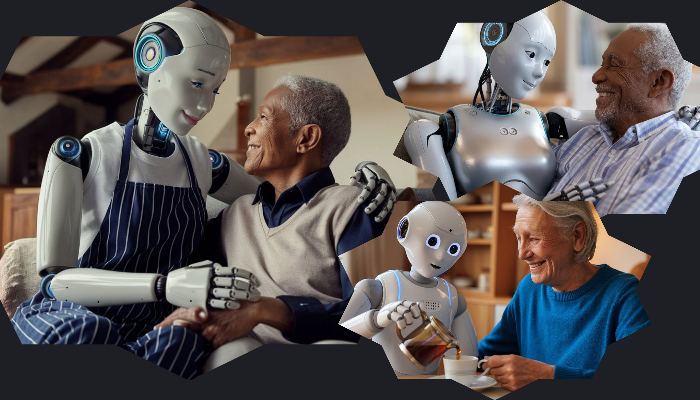
Imagine a world where tech companies and philanthropists join with governmental and non-governmental agencies to create a pool of socio-sexual robots who can be loaned or leased at very little cost to people who may benefit from them.
Anyone who does not have willing family members or too few friends, or who has had mediocre to bad experiences with human caregivers, could certainly find their quality of life enhanced by a dedicated robotic companion.
Of course those in the sex-positive community—sexologists, sex researchers, sex therapists, counselors, and educators, along with sex tech entrepreneurs and companion chatbot developers—would need to be onboarded as vital consultants to such an undertaking, to ensure that prudery does not override the necessity to include sex as an activity of daily living.
Of course, as a sexologist I would cheerfully volunteer to add my two cents to a project like this anytime, anywhere!
And as a cancer patient and older adult with a disability, who is socially isolated and lives alone, I would also add my two cents of lived experience, attesting to the fact that while cancer may not kill me just now, loneliness erodes my health in other ways.
So, let’s get this done, shall we? And do consider me as a beta-testing candidate for any socio-sexual robot prototypes, why don’t you?
Image source: A.R. Marsh using Ideogram.ai